1/9
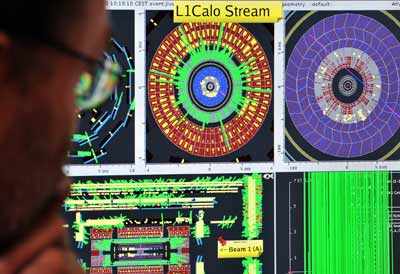
A European Organization for Nuclear Research (CERN) scientist looks at computer screens showing traces on the Atlas experiment of the first protons injected in the Large Hadron Collider (LHC) during its switch-on operation at the Cern's press center on September 10, 2008 near Geneva. (AFP Photo/Fabrice Coffrini)
Read More
2/9
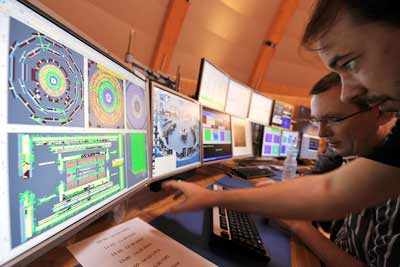
A European Organization for Nuclear Research (CERN) scientist looks at computer screens showing traces on the Atlas experiment of the first protons injected in the Large Hadron Collider (LHC) during its switch-on operation at the Cern's press center on September 10, 2008 near Geneva. (AFP Photo/Fabrice Coffrini)
Read More
3/9
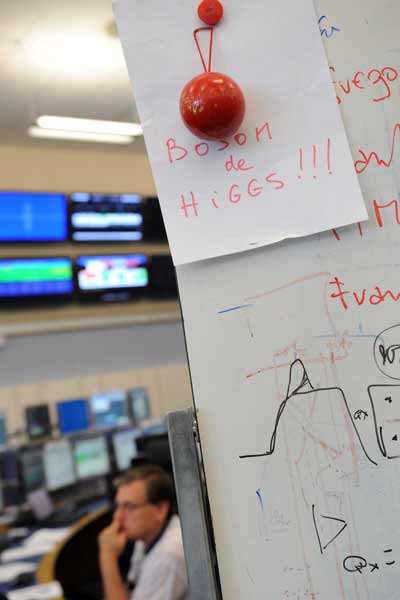
A European Organisation for Nuclear Research (CERN) scientist faces a computer screen at the Large Hadron Collider (LHC) control center on September 3, 2008 near Geneva a few days before CERN will switch on, on September 10, the LHC a massive underground laboratory that will smash protons together and analyse the sub-atomic debris that results. (AFP Photo/ Fabrice Coffrini)
Read More
4/9
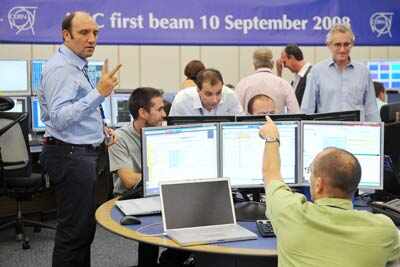
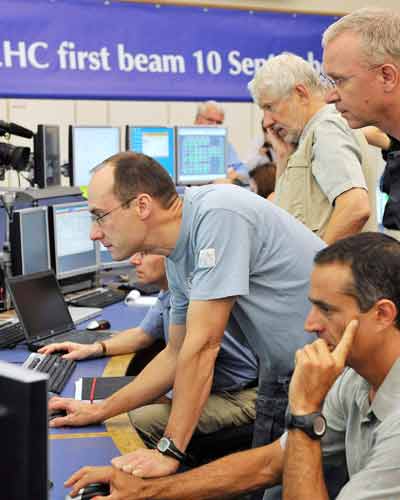
European Organization for Nuclear Research (CERN) scientists are seen at the CERN's control center, during the switch on operation of the Large Hadron Collider (LHC), the world's largest particle collider, in Geneva, Switzerland on September 10, 2008. (Photo/Fabrice Coffrini)
Read More
5/9
European Organization for Nuclear Research (CERN) scientists are seen at the CERN's control center, during the switch on operation of the Large Hadron Collider (LHC), the world's largest particle collider, in Geneva, Switzerland on September 10, 2008. (Photo/Fabrice Coffrini)
Read More

खबरें एक झलक में :
ऐप पर देखें